

If you’ve spent any time in crypto trading communities, you’ve seen the word “perps” thrown around constantly. Perps are also argued to be the most traded instrument in crypto. Traders talk about going long on BTC perps, getting rekt by funding rates, or watching liquidations pile up during a crash. But what exactly are perps, and should you be trading them?
This guide breaks down perpetual futures from the ground up with no assumed knowledge, no unnecessary jargon.
What Are Perps in Crypto?
Perps, short for perpetual futures or perpetual contracts, are a type of financial derivative that lets you speculate on the price of a cryptocurrency without actually owning it, and without any expiration date on your trade.
Unlike traditional futures contracts, perpetual futures don’t have an expiration date, meaning traders can hold their positions indefinitely, as long as they maintain the required margin.
In simple terms, you’re making a bet on whether a coin’s price will go up or down. If you’re right, you profit. If you’re wrong, and especially if you’re using leverage, you can lose your deposit fast.
Perps have become the dominant way people trade crypto. Perps now account for 77% of the $79 trillion in total crypto volume recorded over the past year, with Bitcoin volumes peaking at $50 billion daily in 2026. That dwarfs the spot market where people simply buy and sell coins directly.
How Do Perps Differ from Regular Futures?
To understand perps, it helps first to understand what a regular futures contract is.
Traditional Futures — The Basics
A traditional futures contract is an agreement to buy or sell an asset at a specific price on a specific future date. Two traders agree on a price today, and the contract settles regardless of what happens in between, on the agreed expiry date.
For example, two derivatives traders might enter a futures contract when the price of BTC is $25,000. Person A believes BTC will be worth more than $25,000 in one month, while Person B is confident it will be worth less. Person A agrees to buy one BTC at $25,000 from Person B in a month.
If BTC is above the agreed price on the date of expiry, Person A profits, and if it has fallen, Person B profits.
What Makes Perps Different
The attraction of perpetuals is simple: they allow traders to take a leveraged directional view on an asset at any time of day without worrying about contract expirations.
With 24/7 markets, an ongoing news cycle, and consistent geopolitical surprises, the flexibility to open or close a position with borrowed capital is appealing, especially when news breaks after the ringing of the closing bell.
There’s no settlement date. You stay in the trade for as long as you want or until the market forces you out. The mechanism that keeps the contract price anchored to the real asset price is called the funding rate, which we’ll cover in depth shortly.
How Do Perpetual Futures Actually Work?
Going Long vs. Going Short
When you open a perps position, you pick a direction:
- Long — you believe the price will go up. You profit if it does.
- Short — you believe the price will go down. You profit if it falls.
This is what makes perps valuable beyond just speculation. If you hold Bitcoin and you’re worried about a short-term price drop, you can open a short perp position as a hedge protecting your portfolio without selling your actual coins.
Margin and Leverage Explained Simply
Margin is your collateral, the amount of money you deposit when you make your trade. If losses eat too much of it, the position can be closed (liquidated) by the platform.
Leverage lets you control a bigger position with a smaller deposit. For example, using 5x leverage means a $100 deposit controls a $500 position. Gains as well as losses are amplified with leverage.
Most major exchanges offer leverage ranging from 2x to 100x, with some offshore platforms going even higher. For beginners, high leverage is one of the fastest ways to blow up a trading account. A 10x leveraged position gets liquidated with just a 10% move against you. A 20x position can be wiped out by a 5% swing, and in crypto, 5% moves happen within hours.
There are two types of margin to understand:
- Isolated margin — only the margin you assigned to that specific trade is at risk. Your other funds are protected.
- Cross margin — your entire account balance acts as collateral. You’re less likely to be liquidated, but a losing trade can drain your whole account.
Beginners should almost always use an isolated margin until they fully understand the mechanics.
What Is the Funding Rate?
The funding rate is the mechanism that keeps perpetual futures prices anchored to the real spot price of the underlying asset. Without it, perp prices could drift far from what Bitcoin or Ethereum actually costs on the open market.
The funding rate is a small periodic payment that traders on one side of the contract pay to traders on the other side.
When perpetual futures are priced higher than the spot price, indicating more demand for long positions, traders holding long positions pay a fee to those with short positions.
Liquidation — The Risk You Can’t Ignore
Every leveraged position has a liquidation price, the point at which the exchange forcibly closes your trade because your remaining collateral can no longer cover potential losses.
Liquidations remain a top risk for traders. A common occurrence in highly leveraged markets, liquidations refer to the forced closure of a position.
The result of a trader’s active position moving against them and their collateral falling below required levels. With perpetual contracts, a trader can lose their entire collateral.
The crypto market has seen several historic liquidation events that wiped out billions of dollars across hundreds of thousands of accounts within hours.
A Simple Example of a Perps Trade
Let’s say Bitcoin is trading at $70,000. You believe it’s heading to $80,000, so you open a long BTC perp position.
- You deposit $1,000 as margin
- You use 5x leverage, giving you $5,000 of exposure
- Bitcoin rises 10% to $77,000
- Your $5,000 position gains $500 i.e a 50% return on your $1,000 deposit
Now flip the scenario: Bitcoin drops 10% to $63,000.
- Your $5,000 position loses $500
- That’s 50% of your $1,000 margin gone
- At a 20% drop, you hit liquidation i.e losing the full deposit
Now factor in funding rates. If the funding rate is 0.03% every 8 hours (a common level during bull markets), holding that position for a week costs you roughly 0.63% of your position size in fees alone.
On a $5,000 position, that’s $31.50 per week. Its small individually, but it compounds quickly over longer holds.
How to Read Funding Rates as a Market Signal
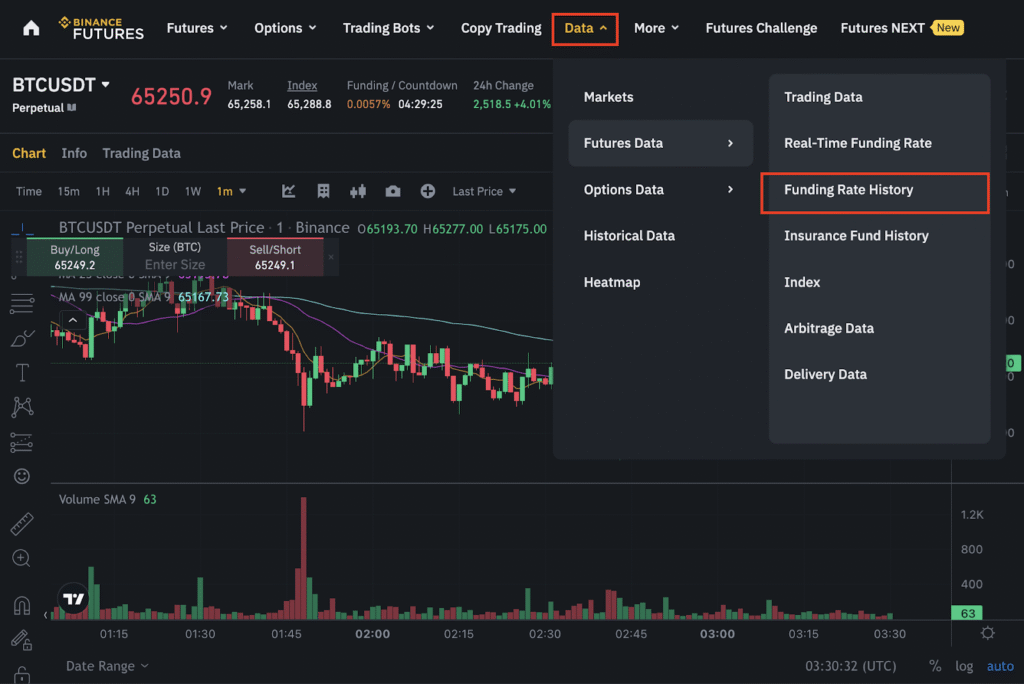
Here’s something most beginner guides skip entirely: experienced traders use funding rates as a sentiment indicator, not just a fee to pay.
Positive funding rate (longs paying shorts):
The market is heavily skewed toward buyers. Everyone is bullish and paying to stay long. When funding rates spike very high, it often signals the market is overheated, and a pullback may be coming, as too many people are on the same side.
Negative funding rate (shorts paying longs):
The market is heavily short. Bearish sentiment dominates. Historically, extended periods of negative funding have preceded sharp upward reversals, because when a positive catalyst hits, the cascade of shorts closing their positions fuels a rapid price squeeze upward.
As of March 2026, funding rates on Bitcoin and Solana futures had been negative for the longest sustained period since the 2022 bear market bottom. This means shorts were paying longs to hold their positions, a setup that has historically preceded sharp reversals when any bullish catalyst arrives.
Centralized vs Decentralised Perps
When you trade perps, you have a choice between centralised exchanges (CEXs) and decentralised exchanges (DEXs). This distinction matters more in 2026 than it ever has.
Centralised exchanges (CEXs) like Binance, Bybit, and OKX are the traditional home of perps trading. They offer high liquidity, a wide range of trading pairs, and polished interfaces. The tradeoff is that you don’t control your funds. The exchange holds them on your behalf, and if the platform is hacked or goes bankrupt, your capital is at risk.
Decentralised exchanges (DEXs) like Hyperliquid let you trade perps directly from your own wallet, without handing custody to a third party. DEX market share in perps trading expanded five times over two years, rising from just 2% of total perps trading volume in January 2024 to over 10% by January 2026. DataWallet Hyperliquid alone captured 16.51% of total market share, proving that on-chain liquidity can now compete with CEX giants.
Where Can You Trade Perps?
The largest platforms for perps trading in 2026 include:
- Binance — holds roughly 29–30% of Bitcoin futures open interest, making it the clear market leader among centralized derivatives.
- Bybit — strong derivatives offering, popular for altcoin perps and an intuitive trading interface
- OKX — competitive on fees and range of available pairs
- Hyperliquid — the leading decentralised perps platform, now supporting S&P 500 perps and a wide range of crypto pairs
- Coinbase — launched regulated Bitcoin and Ethereum perps in 2025, offering a compliant option for US traders
If you’re in the United States, check the regulatory status of any platform you use. Most perpetual futures trading occurs on offshore exchanges not registered with US regulators, and US residents often face restrictions accessing offshore platforms.
Who Are Perps Actually For?
Perps are not designed for everyone, and being honest about this matters.
Perps can be useful if you:
- Have experience reading charts and managing risk
- Want to trade crypto price movements without the process of buying and securing coins
- Need to hedge an existing crypto portfolio against short-term downside
- Want to trade altcoins with leverage that aren’t easily available on spot markets
Perps are probably not right for you if you:
- Are new to crypto and still learning the basics
- Don’t have a clear risk management plan before entering a trade
- Are attracted to the high leverage numbers without fully understanding liquidation
- Are you treating it as gambling rather than a structured trading strategy
The majority of retail traders who use leverage lose money. That is a consistent finding across derivatives platforms globally.
Perps in 2026: What’s Changing?
The perps market has entered a new phase of institutional legitimacy and regulatory clarity.
On the regulatory front, the CFTC announced plans in March 2026 to allow perpetual futures contracts for cryptocurrencies in the US, with CFTC Chairman Michael Selig stating, “The Biden administration drove crypto asset firms and liquidity offshore, including the perpetual futures markets. We’ve got to bring perpetual futures back to the US.”
The product category is also expanding far beyond crypto. In March 2026, S&P Dow Jones Indices licensed the S&P 500 to Trade[XYZ] to launch the first officially approved S&P 500 perpetual futures contract on the Hyperliquid blockchain.
Combined crypto perpetual futures trading volume rose 75% in two years, climbing from $4.14 trillion in January 2024 to $7.24 trillion in January 2026. The market is maturing rapidly, and with US regulatory clarity on the horizon, perps are set to become more accessible and more competitive than ever.
Frequently Asked Questions
Are perps the same as futures?
Perpetual futures are a type of futures contract, but with one key difference: they have no expiry date. Traditional futures settle on a fixed date; perps can be held indefinitely as long as you maintain sufficient margin.
Can beginners trade perps?
Technically, yes, but it’s not advisable without first understanding leverage, liquidation, and funding rates thoroughly. Most experienced traders recommend starting with spot trading and using paper trading tools before touching leveraged derivatives with real money.
What happens if I get liquidated?
When your position is liquidated, the exchange closes your trade automatically, and you lose the margin you deposited for that position. Some platforms also charge an additional liquidation fee on top of the loss.
What is a good funding rate?
There’s no universally good or bad rate. It depends on your position and your trading strategy. A positive funding rate benefits short holders and costs long holders; a negative rate reverses this. Extremely high rates in either direction (above 0.1% per 8 hours) signal an overheated, imbalanced market and carry elevated risk for whoever is paying the fee.
What’s the difference between isolated and cross margin?
An isolated margin limits your risk to the funds allocated to that single trade. Cross margin uses your entire account balance as collateral. An isolated margin is generally safer for beginners because it contains the potential loss.
The Bottom Line
Perps are one of the most powerful and most dangerous tools in the crypto trading ecosystem. They account for the vast majority of crypto derivatives volume for a reason: they offer unmatched flexibility, 24/7 access, and the ability to profit from both rising and falling markets without ever owning the underlying asset.
But that power comes with real risk. Leverage, funding rates, liquidation, and platform risk all work against the underprepared trader
If you’re just starting, treat perps as something to fully understand before you trade, not the other way around. Start small, use low leverage, monitor your funding costs, and always know exactly where your liquidation price sits before you enter any position.