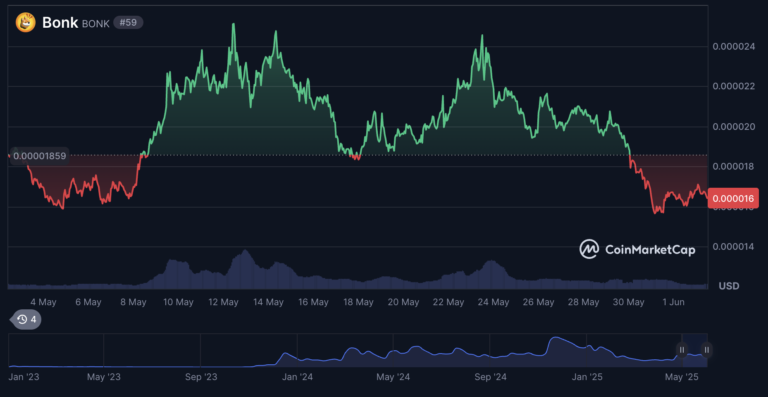

Dogecoin turned early holders into millionaires. Shiba Inu did it again. Then the Pepe coin. Then Bonk coin. And every single time, millions of people watching from the sidelines told themselves they’d get in earlier on the next one.
Maybe you’re one of them. Maybe you’ve seen a token trending on X, heard someone in a Telegram group talking about a 50x, or watched a coin go from nothing to a $500 million market cap in three days. The opportunity feels real because sometimes it is.
But for every Dogecoin, there are thousands of tokens that went to zero within days, taking people’s money with them. The meme coin market in 2026 is bigger, faster, and more dangerous than it has ever been. Knowing how to buy is only half the job. Knowing how to buy safely is what keeps you in the game.
This guide covers both.
What Are Meme Coins, Really?
Meme coins are cryptocurrencies that derive their value primarily from community sentiment, internet culture, and social momentum rather than underlying technology or utility. Dogecoin, created in 2013 as a joke, is the original. Since then the category has exploded into thousands of tokens, some that built genuine, lasting communities, and many more that existed purely to extract money from buyers before disappearing.
In April 2026, the top 10 meme coins by market capitalisation include Dogecoin (DOGE), Shiba Inu (SHIB), Pepe (PEPE), Official Trump (TRUMP), Bonk (BONK), Pudgy Penguins (PENGU), SPX6900, and Floki (FLOKI). These are the established names, coins with genuine liquidity, exchange listings, and communities that have survived multiple market cycles.
Below that tier is a much wilder world: thousands of new tokens launching every week, many on Solana and Ethereum, most with no utility and a very short lifespan. That’s where the biggest gains happen and where most people lose money.
The first question to ask yourself is: which category are you actually trying to buy?
Route 1: Buying Meme Coins on a Centralized Exchange (CEX)
If you want to buy an established meme coin — Dogecoin, Shiba Inu, Pepe, Bonk, Floki, the simplest route is a centralized exchange. You fund your account with fiat or crypto, find the token, and buy it in a few taps.
Step-by-Step on a CEX
Step 1 — Create and verify your account. Sign up on your chosen exchange and complete KYC (identity verification). This typically takes 5–30 minutes and requires a government-issued ID.
Step 2 — Deposit funds. Add money via bank transfer, debit card, or by transferring crypto you already hold. Card purchases are fastest but usually carry higher fees. Bank transfers take longer but cost less.
Step 3 — Search for the meme coin. Use the search bar and find the token by name or ticker symbol. Always double-check you have the right token — fake lookalike tickers are common.
Step 4 — Place your order. Enter the amount you want to spend and confirm the purchase. A market order executes immediately at the current price; a limit order lets you set a specific price to buy at.
Step 5 — Secure your tokens. For any amount you’re not actively trading, consider withdrawing to a personal wallet. Keeping everything on an exchange means the exchange controls your funds.
Which CEX to Use
For most beginners, Coinbase (most beginner-friendly, regulated in the US), Binance (largest selection of meme coins, lower fees), Kraken (strong security reputation), and Bybit (wide altcoin availability) are the most practical starting points. Some meme coins are available on popular centralized exchanges like Kraken, Robinhood, or Coinbase, but more often than not, newer meme coins are not accepted by these exchanges for not meeting safety and value standards.
If a newly launched meme coin isn’t listed on a CEX yet and most aren’t you’ll need Route 2.
Route 2: Buying Meme Coins on a Decentralised Exchange (DEX)
New meme coins almost exclusively launch on DEXs first, Uniswap (Ethereum), PancakeSwap (BNB Chain), or Raydium (Solana) being the most common. To buy on a DEX, you bypass the exchange entirely and trade directly from your own wallet.
This route requires a few more steps, but it’s where the early opportunities are.
Step 1: Set Up a Non-Custodial Wallet
You’ll need a wallet where you control one where you hold your own private keys. The most widely used options in 2026 are:
- Phantom: the dominant wallet for Solana-based meme coins. Clean interface, built-in swap functionality, and strong security features including transaction simulation.
- MetaMask: the standard for Ethereum and EVM-based chains. Works across Ethereum, Base, BNB Chain, and dozens of other networks.
- Trust Wallet: a good multi-chain option if you want a single wallet across many blockchains.
During wallet setup, you’ll receive a seed phrase, a string of 12 or 24 random words. This is the master key to your wallet. Your recovery phrase is the master key, so never share or store it online. Write it down on paper, store it somewhere physically secure, and never type it into any website or app that asks for it.
Step 2: Fund Your Wallet
You need the native token of the blockchain you’re using SOL for Solana, ETH for Ethereum, BNB for BNB Chain. Buy this on a CEX first, then transfer it to your wallet address.
Always send a small test transfer before moving larger amounts. Copy-paste your wallet address rather than typing it manually, and double-check the first and last 4 characters match.
Step 3: Find the Correct Contract Address
This is the most critical step beginners skip and the most dangerous one to get wrong.
Every meme coin has a unique contract address, a string of letters and numbers that identifies the exact token on the blockchain. Scammers routinely create fake tokens with identical or very similar names to popular coins.
Always find the contract address from a verified source:
- The project’s official website
- The project’s official X (Twitter) or Telegram
- CoinMarketCap or CoinGecko listing (once one exists)
To buy meme coins, paste the contract address and confirm the trade. Always verify tokens, because scams are common in early-stage projects. If you find a token by typing its name into a DEX search bar and multiple results appear, that’s a warning sign the real coin has one contract address, and everything else is a fake.
Step 4: Execute the Swap
Open your DEX (or use the built-in swap feature in Phantom or MetaMask), paste the verified contract address, enter the amount you want to spend, and confirm the trade.
One important setting to check: slippage tolerance. This controls how much price movement you’ll accept while your transaction processes. For new meme coins with thin liquidity, you may need to set this to 5–15% but be aware that higher slippage means you might buy at a meaningfully worse price than shown. Set it too low and your transaction may fail repeatedly during fast-moving markets.
Confirm the transaction, pay the network gas fee, and the tokens should arrive in your wallet within seconds (Solana) to a few minutes (Ethereum, depending on network congestion).
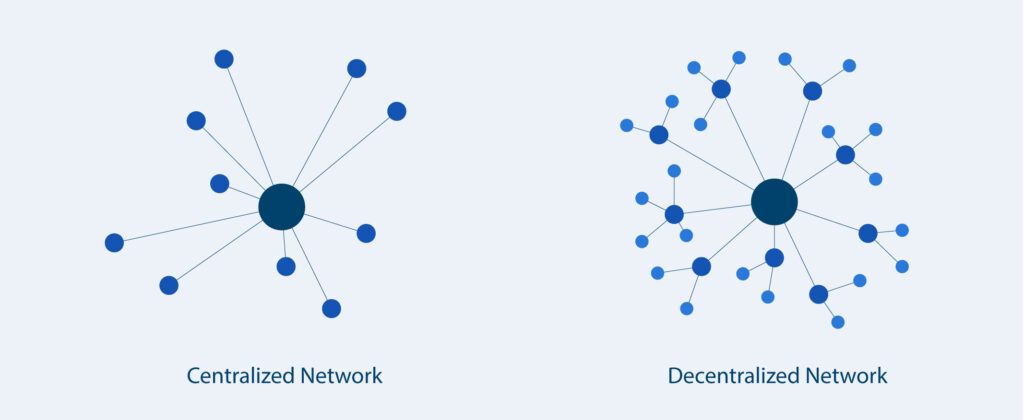
CEX vs DEX: Which Route Is Right for You?
| CEX | DEX | |
| Best for | Established coins, beginners | New launches, early access |
| Ease of use | Simple, familiar | Requires more steps |
| Coin selection | Limited to listed tokens | Any token with a contract |
| Self-custody | No exchange holds funds | Yes you control your wallet |
| Scam risk | Lower (exchange vets coins) | Higher verification is on you |
| Speed to buy | Fast | Fast once set up |
For most beginners, starting with a CEX for established coins is sensible. As you get comfortable with wallets and DEX mechanics, you can explore new launches with eyes wide open.
How to Evaluate a Meme Coin Before You Buy
Most people skip this step entirely. That’s exactly what scammers count on. Before putting any money into a meme coin established or new run through these checks:
Community genuineness: Is the Telegram or Discord active with real conversations, or does it look like a wall of bot messages and price predictions? Real communities argue, share memes, and discuss the project. Fake ones only post “LFG 🚀.”
Tokenomics: What percentage of the total supply do the top wallets hold? If the top 10 wallets own more than 20% of the supply (excluding the burn address), it’s a warning sign of centralised control. You can check wallet distribution on Etherscan (Ethereum), Solscan (Solana), or BscScan (BNB Chain).
Liquidity lock status: In many rug pulls, liquidity is added to create trust, then removed once the price rises. When liquidity is pulled, selling becomes almost impossible and the price collapses instantly. Legitimate projects often lock liquidity for months or years using time-lock contracts. If no proof of a liquidity lock exists or if the lock duration is very short, the danger level increases greatly. Check liquidity lock status on DexScreener.
Contract permissions: Use a tool like RugCheck.xyz to see if the developer can mint new tokens. If they can, they can dump unlimited supply on holders at any time. Other dangerous permissions include the ability to blacklist wallets (preventing you from selling) and hidden transfer taxes that drain your holdings silently.
Audit status: Has the smart contract been audited by a reputable security firm? No audit doesn’t automatically mean a scam, but it is a higher-risk signal. Even audits should be scrutinised, some are rushed, superficial, or done by unknown firms.
The Safety Checklist: How to Spot a Scam Before It Costs You
Fraudsters no longer spend weeks crafting a credible project. They manufacture tokens at scale, iterate quickly, and treat each launch like a disposable funnel with low cost to deploy, short cycle times, and massive distribution through social algorithms.
Here are the specific warning signs to watch for in 2026:
1. Unlocked or short-duration liquidity locks. If the developer can pull liquidity at any time, they will the moment the price is high enough. Always check the lock expiry date, not just whether a lock exists.
2. The “lock extension rug.” Scammers lock liquidity for a seemingly legitimate period, building trust and allowing the token to develop a community. Then, days before the lock expires, instead of extending, they wait for the original lock to expire and immediately pull all liquidity. Always note lock expiration dates.
3. Honeypot contracts. You can buy, but you cannot sell. The contract contains hidden code that prevents anyone except the creator from executing sell transactions. Test this by buying the smallest possible amount and immediately attempting to sell it before committing any real money.
4. AI-generated fake presales. A new scam circulating in 2026 involves “AI-Generated Presale Voids,” where scammers use AI to create fake developer videos and “live support” to trick people into sending funds to a liquidity pool that doesn’t exist. If a presale’s only proof of legitimacy is video content and “live chat,” treat it with serious skepticism.
5. Celebrity and influencer promotions. High-profile endorsements can pump prices rapidly — but they have also been the setup for some of the biggest rug pulls in recent memory. Notable examples include the $3 million $HAWK collapse and the $100 million $LIBRA token scandal, originally promoted by Argentinian President Javier Milei, which crashed within hours of launch. An endorsement is not a safety signal.
Tools to use before buying any new meme coin:
- RugCheck.xyz — contract risk scan for Solana tokens
- Token Sniffer — automated contract analysis for EVM chains
- DexScreener — liquidity, volume, holder data, lock status
- Etherscan / Solscan / BscScan — on-chain wallet distribution
How Much Should You Actually Put In?
This is the question most guides answer with vague platitudes like “only invest what you can afford to lose.” That’s true, but it’s not useful. Here’s a more practical framework:
Treat meme coin exposure as a separate risk bucket. Don’t measure it against your total crypto portfolio, measure it against money you’ve mentally written off. This isn’t where you put your emergency fund or savings. It’s discretionary capital.
One approach is to spread your investment across different meme coin projects rather than concentrate on any single token. A simple example: splitting a $1,000 budget into 20 coins at $50 each. If one becomes the next 1,000x, you’d still make substantial returns even if the others go to zero.
Another approach, suited to coins you have stronger conviction in, is dollar-cost averaging buying small amounts at regular intervals rather than one lump sum. This avoids buying the exact peak of a hype cycle.
A sensible starting point for most beginners: keep total meme coin exposure under 5% of your overall crypto holdings, and no single meme coin position above 1%. Scale up only as you gain experience reading charts, community signals, and on-chain data.
How to Take Profits — The Part Nobody Talks About
Buying is the easy part. Most people who make money on a meme coin eventually give it back because they don’t have an exit plan.
Set your targets before you buy. Decide at what price — or what multiple — you will sell. 2x? 5x? 10x? Write it down. When the price hits that target, execute regardless of how bullish the community looks. FOMO will tell you to hold for more. The smart move is usually to take something off the table.
Sell in stages, not all at once. A common strategy among experienced meme coin traders: sell enough to recover your original investment when the coin reaches 3–5x, then let the remainder run with house money. If the coin goes further, you win. If it collapses, you’ve already secured your principal.
Watch the funding rate and volume trend. When volume starts dropping sharply and the social media chatter slows down, the hype cycle is likely ending. Prices can collapse much faster than they rise. The exit window on a meme coin can be hours, not days.
Don’t wait for “the top.” Nobody reliably sells at the top. Leaving some gains on the table is fine — blowing up a profitable position by holding too long is not.
The Most Popular Meme Coins in 2026
For reference, here are the established meme coins with the strongest market presence entering 2026:
1. Dogecoin (DOGE) — the original. The highest-liquidity meme coin with genuine mainstream recognition and the most predictable trading behaviour of the category.
2. Shiba Inu (SHIB) — the largest “DOGE killer” by market cap, with its own ecosystem including ShibaSwap and a Layer 2 called Shibarium.
3. Pepe (PEPE) — the most successful meme coin of the 2023–2024 cycle, built purely on the internet’s love of the Pepe the Frog character.
4. Bonk (BONK) — Solana’s flagship meme coin, with deep DEX liquidity and integration across the Solana ecosystem.
5. Floki (FLOKI) — started as a Dogecoin spinoff but has built out utility including a metaverse game and DeFi products.
6. Official Trump (TRUMP) — launched in early 2025 and became one of the fastest-growing meme coins by market cap in the cycle, though it has faced significant controversy and volatility.
Every meme coin carries significant downside risk, and most projects launched in the past 12 months have already lost over 80% of their value from peak. Even the coins listed above can lose 70–90% of their value during a bear market. The established names survive those drawdowns; most new launches do not.
Frequently Asked Questions
Do I need a crypto wallet to buy meme coins?
Not for established coins listed on a CEX you can buy directly through the exchange. For new meme coins launching on DEXs, yes, you’ll need a non-custodial wallet like Phantom (Solana) or MetaMask (Ethereum/EVM chains).
What’s the cheapest blockchain to buy meme coins on?
Solana has the lowest transaction fees and fastest speeds for meme coin trading in 2026, which is why it’s become the dominant chain for new launches. Ethereum is more expensive in gas fees but has deeper liquidity for older established tokens. BNB Chain sits in the middle.
How do I know if a meme coin contract address is legitimate?
Find it from the project’s official verified sources only their official website, or their verified social media accounts. Never trust a contract address posted in a Telegram group, comment section, or DM. Always cross-check against CoinGecko or CoinMarketCap once a listing exists.
Can I lose all my money on a meme coin?
Yes — and it happens regularly. Rug pulls, honeypot contracts, and straight market crashes can take a coin to zero within hours. Only invest what you’re genuinely prepared to lose entirely.
Is it too late to buy meme coins in 2026?
The meme coin market still produces outsized winners, but it is significantly more competitive and more saturated than in earlier cycles. Timing still matters enormously. Most people who make money on meme coins in 2026 are doing so by getting in early on lower-cap tokens which also carries the highest scam risk. There is no “safe” way to get rich fast from meme coins. There is only a smarter way to manage the risk.
Final Word
Meme coins are one of the most chaotic, entertaining, and financially dangerous corners of crypto. The potential for outsized gains is real — and so is the potential to lose everything on a project that was designed to fail from the start.
The difference between those who profit and those who don’t usually isn’t luck. It’s preparation. Know your route (CEX or DEX), verify every contract address, run the safety checklist before buying anything new, set your exit targets before you enter, and never put in money you can’t genuinely afford to lose.
The coins that 10x will keep coming. The question is whether you’re positioned to catch one and smart enough to actually sell when it happens.